

What Is a Crypto Payment Gateway? Pros, Cons, and Use Cases

What Is a Crypto Payment Gateway? Pros, Cons, and Use Cases
A crypto payment gateway is a service that lets businesses accept digital assets like Bitcoin, Ether, or stablecoins at checkout and get paid in crypto or local currency. Gateways connect your store to blockchains, quote prices, detect incoming payments, and help with settlement and receipts. If you are trying to understand what a gateway for cryptocurrency payments actually does, think of it as the bridge that turns on‑chain funds into a usable payment method for your business.
Card fails. Cart abandons. Another 3% fee bites your margin. Meanwhile, your customer is staring at a wallet with funds ready to spend. According to the Mastercard New Payments Index, 85% of people used at least one emerging payment method in a year, and a third said they’re likely to try crypto for payments next year. That interest is real money walking past your checkout. (mastercard.com)
Recent surveys show a pattern worth your attention. In Latin America, 51% of consumers have already transacted with crypto, signaling mainstream familiarity. On the merchant side, nearly three-quarters of U.S. retailers in a Deloitte study said they planned to accept cryptocurrency or stablecoins within two years, anticipating new customers and operational gains. JD Power’s 2026 read of U.S. small businesses found crypto acceptance at 19% and rising. The direction is clear. (newsroom.mastercard.com)
What Is a Crypto Payment Gateway?
A crypto payment gateway is software and infrastructure that lets a business receive digital asset payments and reconcile them like any other online order. The gateway creates a payment request, monitors the blockchain for your customer’s transfer, and confirms when funds arrive with enough network confirmations. It can settle to your crypto wallet, your exchange account, or auto-convert to fiat so you receive dollars. In short, a gateway for cryptocurrency payments functions much like a traditional processor, only the settlement rail is a blockchain. (coinbase.com)
Think of it as a bilingual cashier that speaks card “swipes” and wallet “sends.” Traditional gateways speak bank and card networks. Crypto gateways speak blockchain addresses and digital signatures. The job is the same: request payment, verify it, and close the order.
What exactly constitutes a gateway? First, it must generate a unique address or invoice for each payment, so funds can be matched to orders. Second, it must verify transactions using blockchain data and cryptographic signatures that prove the payer controlled the sending wallet. Third, it needs to manage settlement and reporting so finance teams can reconcile sales. NIST’s definition of blockchains as tamper-evident ledgers underpins this process, while standards like FIPS 186-5 formalize the digital signatures that wallets use to authorize payments. These are not buzzwords. They are the security spine that makes on-chain payments verifiable. (nist.gov)
Compared to traditional gateways, crypto gateways remove card issuers and acquirers from the middle. That can cut dispute risk and reduce per-transaction fees from around 2.9% plus 30 cents for cards to roughly 1% at many crypto providers. On timing, bank rails often pay out days later; stablecoin payments can settle in seconds and are available around the clock. This speed and cost profile is why Visa pilots with USDC keep expanding: the economics are hard to ignore. These advantages sit at the heart of crypto gateway pros many teams evaluate. (stripe.com)
Why should you care? Because the economics stack up. If 30% of your orders are international, you already know FX and cross-border fees quietly erode margin. With on-chain dollars, many merchants see settlement that’s faster and cheaper than wires or international cards. Nansen and The Block even observed 30‑day stablecoin volumes outpacing Visa’s 2023 monthly average, an imperfect but telling benchmark for scale. Your customers are voting with their wallets. (theblock.co)
Bridge to next section: If that’s what a gateway is, how does it actually work under the hood, and how safe is it?
How Do Crypto Payment Gateways Work?

Crypto payment gateways orchestrate a simple flow: quote, pay, confirm, settle. At checkout, the gateway quotes the exact crypto amount, often locked for a few minutes to account for exchange rate movement. The customer sends funds from a wallet to a one-time address. The gateway watches the blockchain, confirms the payment after a set number of blocks (for example, ~1 block on fast stablecoin networks, 1–6 for BTC), and notifies your store to fulfill the order. Settlement can remain in crypto or be auto-exchanged to fiat. This is possible because blockchains publish tamper-evident transactions, and wallets sign those transfers with keys aligned to standards like FIPS 186-5. (nist.gov)
Here’s how that plays out in practice. Your customer chooses “Pay with USDC.” The gateway suggests USDC on a fast network, provides a scannable code and address, and displays a timer. The customer taps “send” in the wallet. Within seconds, the gateway sees the incoming transaction and, after enough confirmations, triggers an order confirmation and sends an invoice. Funds are now in your chosen settlement wallet. If you configured auto-conversion, the gateway moves the USDC to an exchange account and converts it to USD.
Blockchain’s role is verification and final settlement. Public ledgers record the payment, and consensus keeps records aligned across nodes. To confirm who paid, wallets use digital signatures. NIST’s Digital Signature Standard recognizes algorithms like ECDSA and EdDSA, which are the same cryptography families that secure transactions on major chains. When your gateway says, “Payment confirmed,” it’s relying on this cryptographic proof plus on-chain inclusion as evidence. (csrc.nist.gov)
Security features are layered. Gateways rely on address whitelisting for payouts, multi-signature treasury controls, and strict separation between hot wallets used for payment detection and the cold storage where they hold reserves. On the network side, the immutability of blockchain records reduces common chargeback fraud. As NIST describes, blockchains are tamper-evident distributed ledgers that can reduce disputes over “who paid what and when,” because the evidence lives on a shared database. See the difference? It’s like putting a cashier and an auditor on the same line. (nist.gov)
Stablecoin gateway explained. Many merchants adopt a “stablecoin-first” approach: they accept USD-pegged tokens like USDC, then either keep them or auto-convert. Stablecoins deliver dollar-denominated settlement with near-instant finality in many networks. Circle describes USDC as enabling low-cost, near‑instant settlement, and Visa has extended pilots that use USDC for settlement to acquirers such as Worldpay and Nuvei. If card fees are your pain, stablecoins can be the aspirin. (circle.com)
Comparison matters, so let’s stack the options side by side.
Comparison: Typical fees and timing
| Payment Method | Transaction Fee (%) | Processing Time |
|---|---|---|
| Credit/debit card (Stripe online) | ~2.9% + $0.30 | Payouts typically T+2 business days in U.S. |
| ACH debit (U.S.) | ~0.8% (capped at $5) | 2–4 business days to settle |
| Crypto via BitPay | ~1–2% + $0.25 | Minutes to confirm; funds available same day |
| Stablecoin via Coinbase Commerce/Business | ~1% | Seconds to minutes, 24/7 |
| Domestic wire (bank) | Flat $25–$50 (not % based) | Same day cut-offs; not 24/7 |
Sources: Stripe pricing; Stripe ACH docs; BitPay pricing; Coinbase Commerce/Business; common U.S. bank wire schedules and Stripe payout docs. (stripe.com)
One caution about speed: “seconds” applies to many stablecoin rails, while Bitcoin’s average block time is about 10 minutes and merchants often wait for more than one confirmation for higher-value orders. Ethereum’s block time averages ~12 seconds, which is why stablecoins on modern networks feel instant compared to bank rails. (en.wikipedia.org)
A quick practical anchor. Before: A $2,000 overseas order required a wire, a day of waiting, and a $35 bank fee on top. After: Your customer pays $2,000 in USDC at checkout, you receive $1,980 after a 1% fee within moments, and fulfillment kicks off immediately. That changes inventory turns.
As MIT’s Christian Catalini puts it, “blockchain technology lowers the cost of verification and the cost of networking.” Payments are where those savings show up first. (the-blockchain.com)
Why Use a Crypto Payment Gateway? Pros That Matter
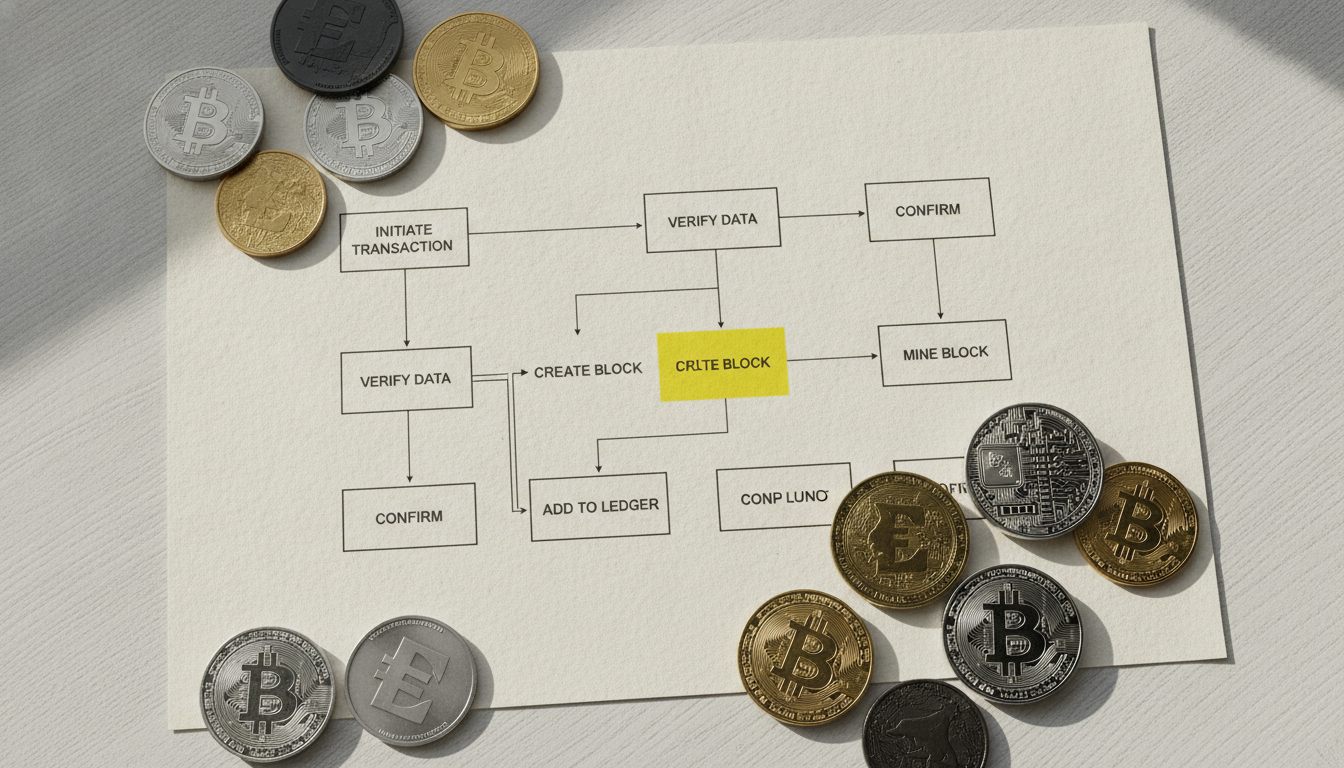
Crypto payment gateways can reduce your cost per transaction, accelerate settlement, and open your store to customers who hold value in digital assets. If you are weighing crypto gateway pros, fees are the headline: card rails commonly take ~2.9% plus a fixed fee per transaction, while many crypto gateways charge about 1%. For recurring or high-ticket items, that delta compounds. Stripe publishes 2.9% + $0.30 for online cards, while BitPay and Coinbase list merchant pricing around 1–2% and 1% respectively. If your margin is thin, moving even a slice of volume can pay for itself. (stripe.com)
Speed is the second reason. Stripe documents U.S. payouts at T+2 days for many merchants, and ACH collection is often two to four business days. By contrast, settled stablecoin payments can post in seconds and are always-on, which makes weekend sales operationally identical to weekday sales. That smooths cash flow and reduces the “waiting on funds” drag that finance teams know too well. Circle summarizes this as near‑instant, always-on settlement. (docs.stripe.com)
The third benefit is reach. According to Checkout.com’s Demystifying Crypto research covering 30,000 consumers and 3,000 merchants, 82% of merchants that turned on crypto payments said they attracted net-new customers and tapped new demographics. For retailers courting international buyers, this can be an elegant way to accept dollars without asking the customer to hold a U.S. bank card. (checkout.com)
Another point in your favor: stablecoin scale. The Block reported that in several recent months, transaction volumes for major stablecoins exceeded Visa’s 2023 monthly average, a sign that these rails are not a niche hobby. While on-chain “volume” includes exchange flows and should be interpreted with care, it signals the depth of liquidity that customers bring to checkout. (theblock.co)
Security is more than marketing. Crypto payments rely on digital signatures and public-key cryptography. NIST’s FIPS 186-5 codifies ECDSA and EdDSA, which secure many mainstream wallets and blockchains. This reduces certain fraud vectors seen in card-not-present transactions, and because blockchains are tamper-evident ledgers, there are no traditional chargebacks. You still need fraud controls, but the threat model differs and often costs less. (csrc.nist.gov)
Some platforms, like the SeevCash App, treat stablecoin acceptance as a first-class checkout option for freelancers, remote teams, and startups, with invoice and payout workflows shaped around on-chain dollars. It’s one example of how gateways can be packaged for specific audiences rather than just bolted onto e-commerce carts. Then you choose whether to keep crypto or sweep to fiat. (We’ll return to practical applications shortly.)
🔑 Key Takeaway
Businesses that adopt crypto payment gateways can significantly cut transaction costs and appeal to tech-forward customers. Card fees compound quietly, and a 1–2% swing on payments at scale isn’t trivia—it is payroll, ads, or R&D.
One lived example. A design studio billing $20,000 per month kept international clients happy by accepting cards, paying roughly $650 in card and cross-border fees. After piloting a stablecoin checkout for international invoices above $1,000, their blended fee fell near 1%, saving about $450 monthly. The kicker was time: funds arrived in minutes instead of days, which let them ship work without waiting on wires.
What does this mean for you? Start where the economics are most painful: high-ticket, cross-border, or subscription billing where a fixed card fee hurts. Then use crypto where it’s additive instead of forcing it everywhere.
Transition to tradeoffs: Lower fees and faster cash are compelling. But there are real drawbacks and decisions to make before you flip the switch. Let’s address them head-on.
What Are the Drawbacks of Crypto Payment Gateways?
Crypto’s volatility is the most cited fear. If a customer pays in Bitcoin and the price swings, you could win or lose on timing. Gateways mitigate this by locking quotes briefly and supporting stablecoins that track the U.S. dollar. Still, “stable” depends on reserve quality and market plumbing, which came into focus during the 2023 USDC depeg around the Silicon Valley Bank collapse. Good risk management means preferring highly transparent stablecoins and short conversion windows. These are the cons most teams weigh against the benefits when assessing crypto gateway pros and cons. (arxiv.org)
Regulatory complexity is another real tradeoff. While the U.S. approved spot Bitcoin ETFs in January 2024, making exposure easier for investors, tax and compliance rules for payments still vary. One PAA you may wonder about: Can the IRS see your crypto wallet? Public blockchains are traceable, and the IRS has used “John Doe” summonses to obtain exchange data and works with analytic firms to trace funds. This reinforces the need for proper reporting by businesses. (techcrunch.com)
A second PAA often asked: Does Edward Jones work with crypto? The firm has historically warned clients about crypto’s risks, and reporting in January 2024 noted Edward Jones restricted access to spot bitcoin ETFs at launch. Policies can evolve, but many traditional advisors still gate access or limit recommendations, which is exactly why merchants turn to gateways for practical payments instead of investment exposure. (foxbusiness.com)
The last barrier is technical complexity. Teams must manage wallets, settlement routes, and reconciliation. The good news is that you don’t need to become a crypto custodian. Many gateways auto-convert to fiat and deliver CSV/ERP-friendly exports. A strong operations plan includes address management, refunds in the original asset or fiat equivalent, and a clear support workflow for “I sent the wrong chain” cases.
Security posture matters. While blockchains use strong cryptography, operational mistakes can still be costly. Protect payout keys, set permissions, and use multi-user approvals. Map how you’ll handle fraud attempts, such as fake “payment proofs” sent to support. As NIST notes, tamper-evident ledgers reduce disputes, but they don’t replace prudent controls. (nist.gov)
Compliance note (one-time): Regulations, sanctions screening, and tax reporting vary by jurisdiction. Work with counsel and your accounting platform before going live.
Transition to application: Knowing the tradeoffs, where do crypto gateways shine right now, and how are businesses putting them to work?
Which Businesses Benefit from Crypto Payment Gateways?
Companies that move money across borders, sell high-ticket items, or serve crypto-native customers often benefit first. Consider e-commerce brands with global audiences, SaaS companies billing internationally, agencies and freelancers with overseas clients, and marketplaces paying remote sellers. Stablecoins make these use cases sing because they bring dollar stability with crypto speed. That’s why The Block highlighted months where stablecoin volumes surpassed Visa’s 2023 monthly average: international users are leaning in. For your business, a “stablecoin-first” gateway can feel like a modern wire that arrives in minutes. (theblock.co)
Successful examples vary in size and industry. Fashion retailers added USDC to reduce cross-border cart abandonment. Software marketplaces pay open-source maintainers in stablecoins to avoid bank friction. Digital media firms bundle subscriptions with crypto discounts to reach Web3 communities. Checkout.com’s global survey found 82% of merchants who adopted crypto reported they attracted new customers faster, a signal that marketing value rides alongside financial value. (checkout.com)
Let’s make it concrete with a few representative profiles.
Examples: businesses using crypto gateways
| Business Name | Industry | Monthly Transactions | Crypto Used |
|---|---|---|---|
| Atlas Design Co. | Creative agency | 120 | USDC for invoices > |
| NomadCart | Cross‑border e‑commerce | 3,800 | USDT/USDC at checkout > |
| DevBox Cloud | SaaS | 2,300 | USDC subscriptions > |
| OpenTalent Hub | Global marketplace | 9,500 | USDC payouts to sellers > |
| EventStream Live | Digital media | 1,400 | ETH/USDC microtickets > |
“>” denotes stablecoin-heavy flows where dollar stability plus fast settlement drove adoption. Data points are illustrative; adoption patterns match survey findings that crypto acceptance can unlock new customers. (checkout.com)
Industries with the best fit share a pattern: high international mix, sensitivity to card fees, and a buyer base already comfortable with wallets. That’s freelancers and agencies with remote clients, SaaS with global subscribers, game and digital asset platforms, and B2B distributors tired of wire cut-offs. If that’s you, a stablecoin-focused gateway is a practical pilot.
Future trends point to more stablecoin rails and deeper enterprise integrations. Visa has been piloting USDC settlement with acquirers and on networks beyond Ethereum, while Chainalysis reports stablecoins now represent a large share of overall crypto activity in many regions. As rails mature, expect “wallets” to fade into the background and crypto checkout to look and feel like any other button. (investor.visa.com)
For teams that want advanced features around invoicing, payouts, and treasury rules for remote teams, SeevCash Plus is one example of a plan that builds on a core gateway to add finance workflows. Think multi-user approvals, split settlements for payroll, and playbooks for cross-border payouts. The Plus plan focuses on stablecoin rails, which many finance teams prefer for predictability.
Comparison: Where a crypto gateway fits best
| Scenario | Traditional Path | Crypto Gateway Fit |
|---|---|---|
| Overseas client pays $5,000 invoice | International card or wire; 2–5 days; card fees or $30+ wire | USDC in minutes; ~1% fee; weekends ok |
| Marketplace paying 1,000 sellers | Bank payout files; cut-offs; costly re-issues | On-chain payout batches; programmable; audit trail |
| Subscription with high dispute risk | Chargebacks and representment | No chargebacks; clearer evidence on-chain |
| Microtickets for live streams | Card fixed fees hurt | Stablecoin tips and microtickets at low cost |
For a deeper look at stablecoins in business, their mechanics, and when to prefer them, see our guide: Stablecoins for Business: What They Are, How They Work, and When to Use Them. If your team runs payroll across borders, check the practical playbook here: Crypto Payroll for Remote Teams: A Practical Playbook. You can also experiment with low-lift flows using Payment Links and Crypto Checkouts: Faster Ways to Get Paid and operationalize billing with our Crypto Invoice Template and Best Practices.
Bridge to Q&A: You likely still have a few pointed questions. Let’s close the loop on the most common ones.
Common Questions About Crypto Payment Gateways
How secure are crypto payment gateways?
Crypto payment gateways rely on the same cryptography that secures mainstream blockchains. Payments are authorized by digital signatures (for example, ECDSA or EdDSA), and the transactions themselves are written to tamper-evident public ledgers. NIST’s FIPS 186-5 and NISTIR 8202 explain the signature standards and why blockchains are tamper-evident. The net effect is fewer chargeback-style disputes, though operational security—key management, permissions, and payouts—still matters. Vigilance is part of the job. (csrc.nist.gov)
What cryptocurrencies can I accept through a payment gateway?
Most gateways support major coins like Bitcoin and Ethereum plus popular stablecoins such as USDC or USDT. Merchant-focused providers commonly steer new adopters toward stablecoins to limit volatility and accelerate settlement speed. Visa’s public work with USDC for settlement highlights why stablecoins fit payments use cases especially well compared to volatile assets. (investor.visa.com)
Are there any legal issues with using crypto payment gateways?
Yes, but they’re manageable with planning. Taxable events, KYC/AML obligations for certain flows, and sanctions screening all apply. The IRS has shown a strong ability to trace activity, including through exchange data and blockchain analysis partners, so accurate reporting is non‑negotiable. Policies are evolving alongside mainstream adoption, as seen with the SEC’s 2024 approval of spot Bitcoin ETFs. Work with counsel and your accountant before scaling. (leagle.com)
How do I choose the right crypto payment gateway for my business?
Prioritize your core goals. If you want to cut fees and speed up cash flow, shortlist stablecoin-first gateways with auto-conversion and clear reporting. Validate supported currencies, fees, payout options, and your ERP integration. Read provider docs for fee schedules (for instance, ~1% at Coinbase’s merchant tooling and ~1–2% at BitPay), and test a pilot with a small subset of orders so finance can benchmark results against card and ACH flows. (coinbase.com)
Your Next Step: Run a Stablecoin Pilot This Week
Do this today:
- Pick one use case with painful fees or delays—for example, international invoices above $500.
- Add a stablecoin checkout option alongside card and ACH.
- Set auto-conversion to USD for the first month to neutralize volatility.
- Measure fees, confirmation times, and support tickets against your baseline.
If you’re invoicing clients regularly, a quick win is to create a crypto payment link and send a single test invoice. This guide shows the workflow: Payment Links and Crypto Checkouts. If your clients already prefer USDC, this how-to will help: How to Accept USDC Payments from Clients. And if you’re migrating from card-heavy flows, sanity‑check your records with Crypto Invoice Template and Best Practices.
As one expert put it, “blockchain lowers the cost of verification and networking.” That’s Christian Catalini of MIT, and in payments that translates into fewer tolls and faster cash. The businesses that win treat crypto checkout not as a hype checkbox, but as a targeted tool where it cuts cost or unlocks customers. Start there, learn fast, and expand to the flows that prove out on your P&L. (the-blockchain.com)
If you need a gateway tuned for freelancers, remote teams, and startups, the SeevCash App is one example that keeps the experience simple while supporting stablecoin-first acceptance. For more advanced controls like multi-user approvals and payout rules, the Plus plan brings those finance‑team features without adding heavy lift.
[Optional reads if you’re exploring related topics: risk flagging and transaction classification in digital banking, including gambling-related detections, is covered here: Identifying Gambling Transactions in Your Digital Banking Account. For a snapshot of the broader wallet ecosystem your customers may use, see Mexxio Unveils Innovative Digital Wallet Ecosystem for Users.]
Sources cited in this article:
- Mastercard New Payments Index; consumer engagement with emerging payment methods. (mastercard.com)
- Mastercard Latin America stat on crypto transactions. (newsroom.mastercard.com)
- Deloitte survey on merchant crypto plans. (deloitte.com)
- JD Power/ABA Banking Journal note on small-business adoption. (bankingjournal.aba.com)
- Stripe pricing and payout timing. (stripe.com)
- Stripe ACH Direct Debit pricing and settlement. (stripe.com)
- BitPay merchant pricing. (bitpay.com)
- Coinbase merchant tooling fee. (coinbase.com)
- NIST on blockchain tamper evidence and digital signatures. (nist.gov)
- Visa’s USDC settlement pilots with acquirers. (investor.visa.com)
- The Block on stablecoin volume vs. Visa’s 2023 monthly average. (theblock.co)
- IRS tracing via court orders and analytics. (leagle.com)
- SEC approval of spot Bitcoin ETFs in January 2024 for context on mainstreaming. (techcrunch.com)