

How to Reconcile Crypto Payments in Your Accounting System

How to Reconcile Crypto Payments in Your Accounting System: Practical Workflows for Accounting Teams
To reconcile crypto payments within your accounting system, match each on‑chain transaction to its source document (invoice, subscription, or receipt), record fair value at receipt time, map fees and gas, and post realized gains or losses on conversion or settlement. Use a crypto subledger that syncs to your general ledger, then perform periodic wallet‑to‑ledger and bank‑to‑ledger tie‑outs so accounting stays complete and auditable.
Over 40% of businesses already use crypto for B2B payments, yet many teams still wrestle with reconciliation and month‑end close delays. According to a 2024 GoodFirms survey, 44% of companies reported using digital assets for B2B payments, a level of activity that raises the stakes if records are messy or late. The cost of confusion is real: delayed revenue recognition, misstated balances, and audit headaches. (goodfirms.co)
The thesis of this guide is simple: reconciling crypto payments is essential if you want reliable books, faster closes, and clean audits. It is not too complex when you break it into a clear workflow and choose the right tools. We’ll prove that step by step.
What are crypto payments and why are they rising?
Crypto payments are transfers of digital assets (for example, stablecoins like USDC and USDT, or cryptocurrencies such as BTC and ETH) used to settle invoices, subscriptions, or point‑of‑sale transactions. They are rising because they move fast across borders, can reduce intermediary fees, and align with customer demand. In the U.S., acceptance among small businesses is climbing again, with J.D. Power reporting 19% adoption in 2026. Stablecoins, in particular, now dominate on‑chain commerce activity, accounting for most service usage across many regions. These payment patterns are no longer fringe; they are an operational reality that finance and accounting teams must reconcile with the same rigor used for card and ACH flows. (bankingjournal.aba.com)
Definition first, complexity second. A crypto payment is simply a receipt of value to a wallet you control. The twist is that wallets are public addresses on blockchains, confirmations are timestamped on chain, and the medium may be stable in nominal value or subject to market swings. If you sell a $1,000 subscription and the customer sends USDC, your receivable might clear within minutes, with network fees that appear as “gas” rather than a card processor deduction. That is why reconciling crypto receipts to invoices in your ledger benefits from consistent rules and a stablecoin accounting workflow.
Why now? Two forces converged. First, customer behavior: more buyers ask to pay in stablecoins for speed and predictable settlement. Second, vendor readiness: payment processors and accounting tools have matured, giving finance teams reliable imports, matching, and GL posting. Chainalysis finds stablecoins account for the majority share of transactional usage on many services, a practical signal for AR teams planning their next payment rail. (chainalysis.com)
There is a growth story hiding in the details. As wallets replace wire instructions for some customers, your collections team can shorten DSO on cross‑border invoices that used to sit in transit for days. If your average international wire takes T+2 and costs $35, a stablecoin transfer that lands in minutes for cents changes cash timing. Faster cash means stronger cash‑flow planning, especially for subscription‑heavy businesses. See how that works?
Here’s a lived example. A remote design studio in Austin bills a client in São Paulo for $12,000. Before: the studio waited two to four days for a SWIFT wire, sliced by FX spreads and landing fees. After: the client paid in USDC; funds arrived in ten minutes; the studio converted half to dollars the same day and left half in USDC to pay a contractor. Before and after is the difference between anxious cash management and calm.
If you accept recurring payments, map them to a stablecoin accounting workflow that handles subscription invoices, proration, and dunning logic. For set‑up patterns that reduce churn and late payments, see our guide to stablecoin subscriptions and dunning tactics in Recurring Subscriptions with Stablecoins: Setup and Dunning Best Practices. For invoicing mechanics with USDC, including how to pick invoice fields and reduce settlement delays, see How to Invoice in USDC and Reduce Payment Delays.
Why is reconciliation in accounting so important for crypto?
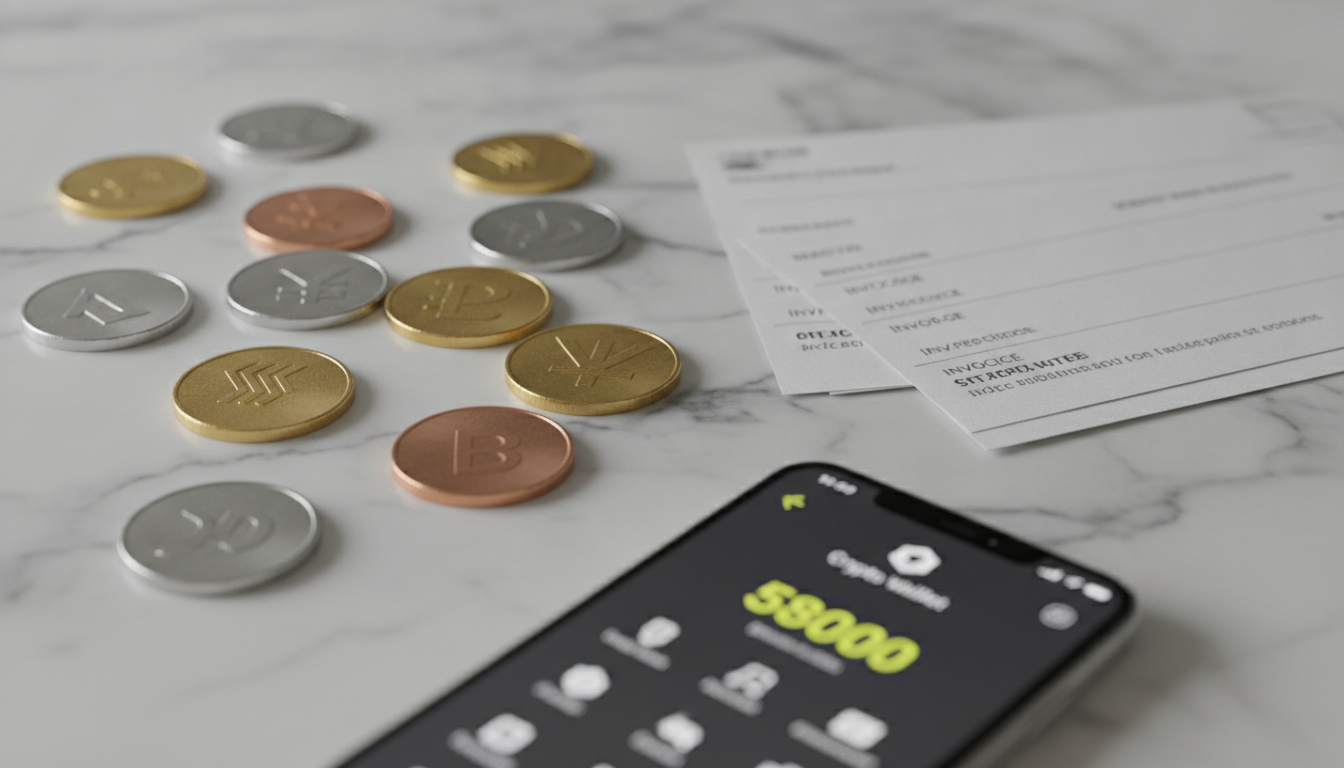
Reconciliation for crypto payments is critical because you must prove that every wallet inflow ties to an invoice or receipt, that fees are recorded in the right accounts, and that fair value at the moment of receipt is captured under the applicable accounting framework. Under new U.S. GAAP, qualifying crypto assets are measured at fair value each reporting period with changes in net income; under IFRS, most holdings fall under IAS 38 as intangibles unless inventory criteria are met. Poor reconciliation invites misstatements and audit friction, while disciplined workflows shorten close and strengthen compliance. (fasb.org)
Let’s get blunt about stakes. If you can’t tie your wallets to your books, you risk misstating cash equivalents, mixing operating and non‑operating flows, and missing realized gains or losses when you convert to fiat. One missing gas fee here, a misclassified custodian wallet there, and your audit trail crumbles. Auditors will not sign an opinion built on screenshots and hope.
Here’s how crypto reconciliation differs from traditional methods:
-
Data source: Instead of bank statements, you reconcile against blockchain explorers or custodian exports. The ledger is public, but translating it into accounting entries takes careful mapping.
-
Timing: Settlement finality is quick, often minutes. That speed can hide timing differences (for example, invoice issued on the 30th, funds land on the 1st).
-
Measurement: Under U.S. GAAP, qualifying crypto assets are at fair value with P&L impact each period starting for fiscal years beginning after December 15, 2024. That means your subledger must capture fair values at receipt and subsequent remeasurement if you hold past month‑end. “This ASU improves the accounting for and disclosure of certain crypto assets,” the FASB notes. The mechanics matter. (fasb.org)
-
Presentation and disclosure: IFRS reporters often apply IAS 38 to holdings and must decide whether the cost or revaluation model fits, subject to active market constraints. That choice, combined with inventory treatment for brokers or dealers, changes reported values and disclosures. (ifrs.org)
So the risk is real. What can you do about it? Treat crypto payments like any other cash cycle: define a system of record, codify matching rules, and run periodic reconciliations with clear variance thresholds. The process is teachable and repeatable, and it lets accounting teams reconcile crypto AR with less manual effort.
Which tools help reconcile crypto payments?

The right software reduces manual work, standardizes entries, and integrates cleanly with your GL. Look for three essentials: reliable wallet and exchange data ingestion, rules‑based classification that understands fees, and push‑to‑GL integrations with QuickBooks, Xero, or NetSuite. Cross‑functional needs matter too: AR teams need invoice‑level matching, controllers need audit trails, and CFOs want board‑ready reporting. Leading platforms publish GL integration guides and offer subledger‑to‑ledger syncs, which is the backbone of a fast month‑end close. (docs.bitwave.io)
A few categories to consider:
-
Crypto accounting subledgers that connect to your ERP and general ledger.
-
Treasury and web3 finance platforms that enrich on‑chain data with business context.
-
GLs with native crypto modules.
Integrations are no longer theoretical. Bitwave documents step‑by‑step NetSuite connections with token‑based authentication and supports GL syncs to QuickBooks and Xero. TRES Finance details ERP integrations that let teams define accounting rules and monitor sync health for QuickBooks, Xero, and NetSuite. Cryptio publishes dedicated NetSuite and Xero integration pages. These are the bread‑and‑butter pathways that turn on‑chain reality into debits and credits you can trust. (docs.bitwave.io)
Some platforms also make the front of the AR process easier. For instance, a crypto invoice and subscription layer that exports reconciliation‑ready entries to your GL can remove two or three manual steps per payment. One example is the SeevCash App, which is designed to help freelancers, remote teams, and startups collect in stablecoins while generating exports that carry through to accounting systems. In teams that outgrow basic needs, an upgraded plan like SeevCash Plus can centralize more advanced payment rules and reporting before entries post to your ledger.
Comparison snapshot
-
Ratings below come from verified‑review sites and can change over time; check live pages when you buy.
-
Pricing is often custom for enterprise plans; the tax modules sometimes display list prices while accounting subledgers are “contact sales.”
Table: Crypto accounting tools
| Tool Name | Key Features | Pricing | User Ratings |
|---|---|---|---|
| Bitwave | Enterprise crypto accounting subledger, AR/AP workflows, ERP integrations (NetSuite, QuickBooks, Xero), rules engine, audit trail | Enterprise pricing, custom | G2: 4.6/5 (30+ reviews) as of 2026. (g2.com) |
| SoftLedger | Modern GL with native crypto module, multi‑entity consolidation, real‑time reporting | Contact for pricing | G2: 4.6/5 (49+ reviews) as of 2026. (g2.com) |
| Cryptio | Accounting and audit data platform, advanced NetSuite/Xero integrations, multi‑chain ingestion | Enterprise pricing, custom | G2: limited public reviews; check current listing. (g2.com) |
| Ledgible | Crypto tax and accounting platform, SOC‑audited, enterprise data reporting | Accounting: custom; Tax Pro: from $49 | Trustpilot: 4.4/5 (32 reviews) noted; confirm for enterprise use. (ledgible.io) |
| TRES Finance | Web3 treasury and accounting, 220+ data sources, ERP sync, DeFi coverage | Enterprise pricing, custom | G2: 5.0/5 (limited reviews). (g2.com) |
A brief word on ratings. Review platforms can be helpful signals, though always pair them with proofs like SOC reports, customer references, and a sandbox trial with your data. For example, Bitwave’s public docs show concrete GL workflows, and TRES’s help center lists ERP sync steps, which matter more than marketing lines when you are wiring a close process. (docs.bitwave.io)
Want to compare AR workflows head to head? Test two vendors on the same sample set: 200 stablecoin invoices with partial payments, discounts, and network fees. Score them on: duplicate detection, customer name normalization, and whether they produce auditable, line‑level journal entries. The fastest demo wins nothing if the export breaks your chart of accounts.
How do you reconcile crypto payments step by step?
You reconcile crypto payments by establishing a single source of truth for wallet data, defining matching rules that connect each inflow to an invoice, capturing fair value at the time of receipt, recording fees, and posting entries to your GL through a subledger. The process ends with periodic tie‑outs: wallet‑to‑ledger, exchange‑to‑ledger, and bank‑to‑ledger after any conversions. This cadence preserves accuracy, improves close speed, and withstands audit review. It is the backbone of accounting for crypto receipts in AR.
Step 1: Map your payment surface
List every address, custodian account, and payment processor you use. Tag them by purpose: AR collections, treasury, exchange, or test. Do not mix treasury wallets with customer‑facing wallets. It is like sending two salespeople to pitch the same client; you want clear territories.
Step 2: Define your accounting policy for receipts
-
Measurement basis: Under U.S. GAAP (ASU 2023‑08), qualifying crypto assets are measured at fair value each period with changes through earnings. For IFRS, most holdings are intangibles under IAS 38 unless inventory applies. Your policy should state which prices you use (for example, a principal market price source captured at block confirmation time) and where you record subsequent changes if you hold through period end. (fasb.org)
-
Fees: Treat network fees as expense or as a reduction of proceeds aligned with your policy. For inbound AR, most teams record gas as a processing expense.
Compliance note: This article focuses on reconciliation mechanics, not tax. For tax treatment, consult a qualified CPA in your jurisdiction and maintain records that match local rules, including invoice metadata and transaction hashes.
Step 3: Ingest wallet and processor data into a subledger
Use a tool that imports raw on‑chain data and turns it into standardized transactions. If you are early stage, you can start with CSV exports, but graduate fast. Manual CSV work hides errors. A subledger lets you set rules once and apply them consistently, which is vital when accounting teams reconcile crypto payments at scale.
Step 4: Create matching rules for AR
-
Match by amount and memo fields first, then by customer wallet address. Some teams embed invoice IDs in the transaction memo or use unique payment addresses per invoice. That pays off later when matching at scale.
-
Build tolerances for penny‑level differences due to network fees or FX slippage, and auto‑flag exceptions.
-
For recurring invoices and subscriptions, encode your dunning steps and proration logic outside the ledger so the subledger sees clean, final amounts. For practical set‑ups that cut late payments, see Recurring Subscriptions with Stablecoins: Setup and Dunning Best Practices.
Step 5: Record fair value at receipt and fees
At the time of receipt, capture the fiat fair value. For a $1,000 invoice paid in USDC, you will typically debit a crypto‑denominated clearing account and credit revenue when the invoice is applied, recognizing any fee as expense. If you immediately convert to USD, you will post a realized gain or loss versus the receipt valuation if prices moved.
Step 6: Post to your GL
Push approved entries from the subledger to the GL daily or at least weekly. Use dedicated clearing accounts for each payment rail and wallet cluster. This one decision reduces detective work during audits and keeps your AR reconciliation tips actionable for new team members.
Step 7: Perform tie‑outs
-
Wallet‑to‑ledger: The subledger balance for each wallet should match the chain balance net of in‑flight items.
-
Exchange‑to‑ledger: Custodian statements should reconcile to subledger balances, with suspense accounts cleared.
-
Bank‑to‑ledger: After conversions, your fiat settlements hit your bank. Reconcile conversion proceeds and fees to the bank statement.
Step 8: Close cadence and sign‑offs
Define a close checklist: import completeness check, exception queue cleared, high‑value transactions manually reviewed, journal batches posted, and reconciliations signed by preparer and reviewer. Then lock the period.
💡 Pro Tip Regular reconciliation not only ensures accuracy but also helps identify and prevent fraud. A sudden spike in gas fees, unusually timed micro‑payments, or an unknown deposit can signal attempted misuse. Exceptions are early warnings; treat them as signals, not noise.
Best practices that prevent messes
-
Use purpose‑built “collections” wallets for AR. Segregation simplifies tie‑outs.
-
Publish payment instructions that enforce invoice IDs in memos.
-
Build crypto AR reconciliation tips into your runbook: maintain a known‑addresses table by customer, auto‑apply receipts with a ±0.5% tolerance, and reconcile high‑risk chains daily.
-
For stablecoin accounting workflow design, prefer price sources that match your conversion path. If you convert USDC on Coinbase, capture Coinbase’s price at confirmation time to reduce realized vs. recorded variance.
Frequency that works in the real world
-
Daily: Import and auto‑match transactions, clear exceptions over a cup of coffee.
-
Weekly: Push to the GL, reconcile collections wallets.
-
Monthly: Full wallet, custodian, and bank tie‑outs; management review.
Before and after, in one glance
-
Before: CSV exports from three wallets, manual vlookup to invoices, fees posted ad hoc, and month‑end surprises.
-
After: A subledger imports all wallets, rules match receipts to invoices, fees are auto‑classified, and one click posts batches to the GL. Close time shrinks, and audits become a walkthrough, not a fire drill.
What challenges arise and how do you fix them?
The main reconciliation challenges are data fragmentation, volatility, fee complexity, and inconsistent invoice identifiers. You fix them by centralizing wallet data, locking a fair‑value policy, codifying rules for fees and partial payments, and standardizing invoice IDs or unique addresses per invoice. Teams that do this report faster closes and fewer audit adjustments.
Pitfall: Fragmented data across wallets, processors, and exchanges
Fix: Appoint a single subledger and integrate it with your GL. Require all new wallets to be registered before use. The control is mundane, the payoff enormous.
Pitfall: Volatility between receipt and conversion
Fix: If you convert immediately, gain/loss will be small. If you hold, define when you remeasure under your framework. Under U.S. GAAP’s ASU 2023‑08, qualifying crypto assets are fair‑valued with P&L impact each period. Under IFRS, most holdings are intangibles; revaluation requires an active market and consistent application. Document this once. (fasb.org)
Pitfall: Fees that don’t map cleanly
Fix: Treat network fees and processor charges distinctly. Use separate GL accounts and rules so fees don’t get buried in revenue or COGS.
Pitfall: Weak invoice identifiers
Fix: Require customers to paste the invoice ID in the transaction memo, or issue a unique receiving address per invoice. No identifier, no auto‑match.
Pitfall: Over‑reliance on raw stablecoin volume stats
Fix: Focus on your customers and your rails. While some reports show stablecoin volumes rival or exceed card networks, much of that activity can reflect non‑retail flows. The signal for you is service share and your own conversion paths, not headline aggregates. Chainalysis reports stablecoins’ dominant role in service usage, a more relevant indicator for AR. (chainalysis.com)
Want more grounding? For invoice construction that speeds approvals and cuts disputes, bookmark Crypto Invoice Generator: What to Include and How to Send. If delinquency is your drag, use the fraud‑prevention and payment‑success checklist in Reduce Failed Payments and Fraud in Crypto Invoicing. And if AR‑to‑cash timing is the lever, revisit terms strategy in Payment Terms (Net 15 vs Net 30) and Cash Flow Strategy for Freelancers.
Common Questions About Reconciling Crypto Payments
What are the main challenges in reconciling crypto payments?
The biggest hurdles are scattered data, inconsistent invoice identifiers, and interpreting fees and conversions. Many teams collect across several wallets and processors, then try to stitch history together at month‑end. That’s why a subledger matters. It ingests on‑chain and custodian data, applies rules for gas and processor fees, and then pushes clean entries to your GL. Volatility creates another wrinkle: if you hold assets past month‑end, you must capture end‑of‑period fair values under your framework. U.S. GAAP now requires fair value for qualifying crypto assets with changes in net income; IFRS typically applies IAS 38 unless inventory criteria are met. Write your policy once and let software enforce it. (fasb.org)
How often should I reconcile my crypto transactions?
Aim for daily imports and matching, weekly GL postings, and monthly full tie‑outs. Daily rhythm catches exceptions early, weekly postings keep your books current, and month‑end reconciliations create the audit trail. Many controllers also run a mid‑month “mini‑close” for stablecoin rails to spot issues before the last week. If your volume is low, you can shift to a twice‑weekly import cadence, but do not slip below monthly. Merchant sentiment and adoption are moving upward again, and more volume usually follows sentiment, so prepare for scale. (bankingjournal.aba.com)
What tools can help with crypto payment reconciliation?
Look at crypto subledgers with GL integrations and clear audit trails. Bitwave publishes NetSuite, QuickBooks, and Xero workflows; TRES Finance documents ERP syncs and accounting‑rules management; Cryptio lists NetSuite and Xero integrations; SoftLedger brings a native crypto module into the GL itself. For enterprise plans, pricing is often custom; test with your real data and chart of accounts before you commit. Verified‑review sites show Bitwave and SoftLedger averaging 4.6/5 on G2 as of 2026, which is a useful, if imperfect, signal. (docs.bitwave.io)
Are there regulatory considerations when reconciling crypto payments?
Yes. From an accounting perspective, U.S. GAAP now requires entities holding qualifying crypto assets to measure them at fair value each reporting period with changes in net income. IFRS reporters often apply IAS 38 to holdings and IAS 2 when digital assets are inventory. Disclosures differ, and policies must be documented. Outside financial reporting, payment and licensing rules vary by jurisdiction; consult legal and tax advisors. As FASB put it, the goal of the new ASU is to “improve the accounting for and disclosure of certain crypto assets.” Treat reconciliation as the foundation for those disclosures. (fasb.org)
Conclusion: Put reconciliation on rails today
Do this today: pick one wallet you use for customer receipts, connect it to a crypto subledger, import the last 60 days, and build three rules—invoice ID match, fee classification, and auto‑post to a “Crypto AR Clearing” account. Then schedule a 30‑minute daily review to clear exceptions. That single pilot will show you where the friction hides and how quickly it disappears once rules go live.
If you want a front‑end invoicing and subscription layer that already speaks stablecoin and exports reconciliation‑ready data, explore SeevCash and connect it to your GL stack. Whether you adopt that or another tool, the north star is the same: entries that tie cleanly from chain to ledger, period after period.
Keep momentum, and let this be the month you turn crypto AR from a spreadsheet scramble into a close you can set your watch by.
[Related reading for your workflow]
-
The Complete Guide to Accepting Crypto and Stablecoin Payments for Startups and Remote Teams
-
Modern Invoicing for Global Freelancers and SaaS: From Quote to Cash
Sources and notes
-
J.D. Power small‑business crypto acceptance via ABA Banking Journal: 19% in 2026. (bankingjournal.aba.com)
-
FASB ASU 2023‑08: Fair value with changes in net income for qualifying crypto assets. (fasb.org)
-
IFRS Interpretations Committee (2019) agenda decision: Holdings of cryptocurrencies, IAS 38/IAS 2 guidance. (ifrs.org)
-
Chainalysis: Stablecoins’ dominant share of service usage. (chainalysis.com)
-
GoodFirms B2B crypto payments usage (44%). (goodfirms.co)
-
Bitwave, TRES, Cryptio, and SoftLedger integration and rating references. (docs.bitwave.io)
-
Expert quote reference: FASB press release language. (fasb.org)
-
For invoice strategy, payment success, and terms, see internal resources linked above.