

Payment Terms (Net 15 vs Net 30) and Cash Flow Strategy for Freelancers

Payment Terms (Net 15 vs Net 30) and Cash Flow Strategy for Freelancers
The short answer: choosing between Net 15 and Net 30 determines when cash actually lands in your account. Net 15 means clients have 15 calendar days to pay, Net 30 allows 30. For most freelancers, a shorter payment window tightens the cash cycle, reduces risk, and makes budgeting easier, especially when clients sometimes miss due dates. If you care about cash flow for freelancers in the real world, the clock you set on invoices matters.
You may think longer terms show “professionalism” or make clients happier. Then rent comes due. Your card payment bounces. A promised wire “goes out Friday,” but it is a holiday weekend. You still need to pay your subcontractor. Longer terms can quietly turn a good month into a scramble. The fix starts with choosing the right terms and backing them with process.
What do Net 15 and Net 30 payment terms mean?
In plain terms, “Net 15” requires full payment within 15 calendar days of the invoice date, while “Net 30” allows 30 calendar days. Unless your contract explicitly says “business days,” the clock runs through weekends and holidays, with payment typically processed the next business day if the due date lands on a non‑banking day. In U.S. federal contracting, the Prompt Payment Act treats Net 30 as a legal deadline once a proper invoice is received and work is accepted, and agencies owe interest if they miss it. For bank transfers, remember ACH settles only on business days, so a Friday submission may show up on Monday, even when the invoice was “paid” over the weekend. These small timing rules matter to your cash flow. (legalclarity.org)
Let’s define the pieces that create confusion. “Net” refers to the total amount due after credits and adjustments. The number that follows is the exact count of days until payment is due. Some contracts modify the start date (from shipment, delivery, or “receipt of a proper invoice”), and some use “EOM” (end of month) variants like “Net 30 EOM,” which pushes the due date to 30 days after the month closes. Read the term, then read what starts the clock. See the difference? (en.wikipedia.org)
What does “1.5% net 15” mean? Two common uses exist, and only context settles it. In a discount format, “1.5% 15, Net 30” means the client gets a 1.5% discount if they pay within 15 days, otherwise the full amount is due in 30. In a late-fee format, it can mean a 1.5% monthly interest charge applies once the invoice becomes 15 days overdue. Always write the phrase unambiguously on the invoice. As invoice terms best practices go, clarity beats cleverness every time. (aep.com)
Does Net 15 include weekends? Yes, unless you and the client explicitly agree on business days. If payment lands on a weekend or federal holiday, the banking rails settle it the next business day. That usually means ACH credits posted after Friday cutoffs hit Monday. Wires settle on business days too. Minor detail, major planning impact. (legalclarity.org)
A simple example of Net 15: you issue an invoice on March 1 with “Net 15.” Payment is due by March 16. If March 16 falls on a Sunday, most accounting teams process on Monday without penalty, but clarify this in your terms so nobody rolls their eyes at the reminder you send on Tuesday. (ledgerup.ai)
Who typically uses Net 30? It is common in B2B trade credit where buyers want working-capital breathing room, for example in manufacturing, distribution, and wholesale. Enterprise and public-sector buyers often expect Net 30 or longer, though contractors to U.S. federal agencies operate under Prompt Payment Act rules that define specific acceptance and “proper invoice” triggers. (nuvo.com)
With the vocabulary pinned down, we can talk about what really matters: how the term you choose ripples through your cash flow.
How do payment terms impact cash flow?
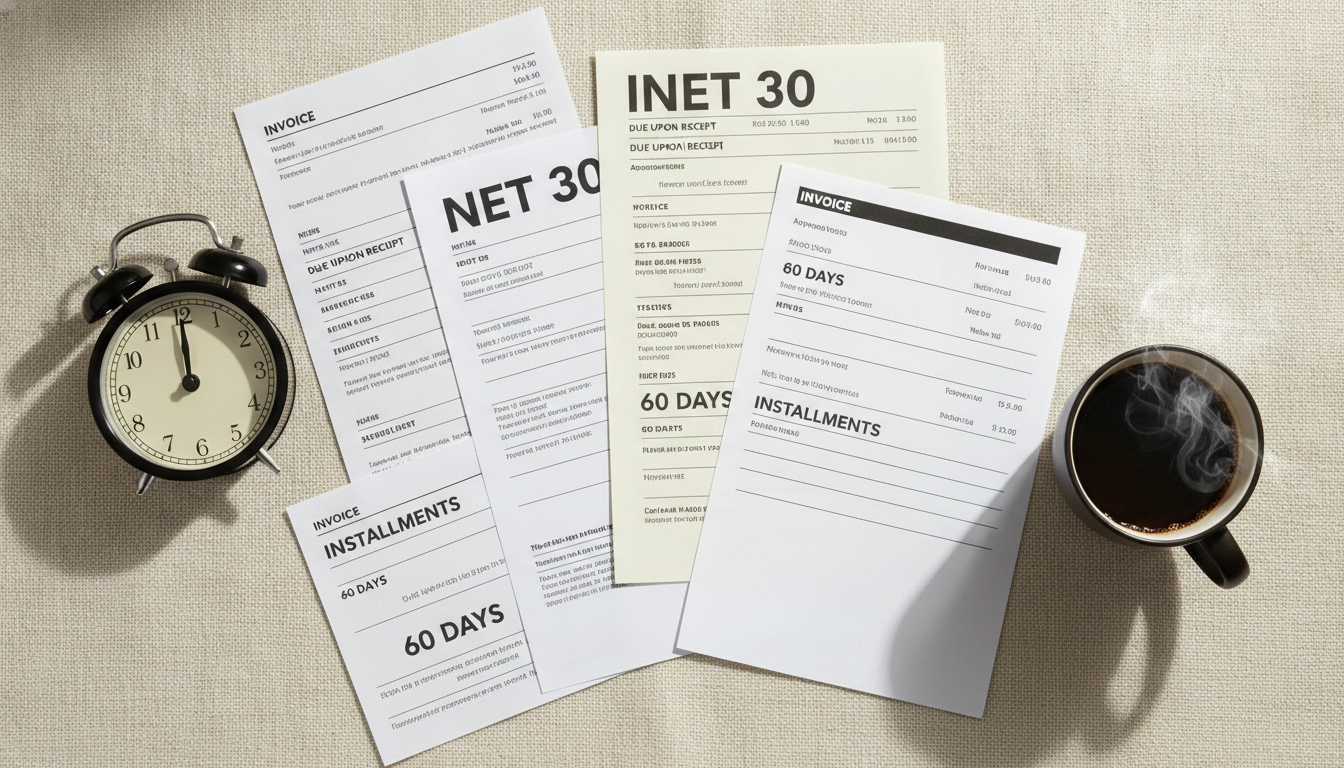
Payment terms shape the gap between when you deliver work and when money arrives. For a freelancer with thin reserves, even a 15‑day stretch can feel long, and 30 days can be the difference between smooth operations and using a credit card to cover rent. Research from the JPMorgan Chase Institute found the median small business holds just 27 cash‑buffer days, meaning one late Net 30 invoice can push you below a safe cushion. Meanwhile, U.S. small businesses report being owed more than $17,000 in late invoices on average, a drag that forces many to raise prices or borrow. When half of B2B invoices end up overdue in some sectors, betting your bills on the honor system is not a strategy. Shorter terms compress your exposure, speed up your working capital cycle, and lower the odds you need to float a client. For cash flow for freelancers, this is the single most controllable lever. (jpmorganchase.com)
Late payments carry hidden costs. Chasing money burns time and morale, and it often lands on nights and weekends when clients respond. Surveys of finance teams show meaningful portions of invoices arriving late, echoing what many freelancers feel: the longer the term, the more likely a “quick delay” turns into a 45‑day wait. And once a client is late, some never recover their on‑time habit without structure. Stick to your terms and your reminders. Your future self will thank you. (cfo.com)
Why does the weekend rule matter? Because banks settle ACH only on business days, even though your contract counts calendar days. If a client pushes “pay” on Friday at 5:30 p.m., the deposit often posts Monday, and Same Day ACH works only within the published Fed settlement windows. Aligning your invoicing rhythm and due dates with this cadence removes friction that looks like “lateness” but is really a timing mismatch. (frbservices.org)
One more nuance for U.S. federal work: the Prompt Payment Act requires agencies to pay interest automatically on late invoices once a proper invoice is received and work is accepted. If you do agency work, your “Net 30” is not just etiquette, it is a compliance timeline. Freelancers sometimes leave that money on the table. (fiscal.treasury.gov)
🔑 Key Takeaway
Choosing the right payment terms can significantly improve your cash flow management. Shorter terms reduce the days your money is at risk, while tighter alignment with banking settlement windows helps you avoid “false lateness” and unnecessary stress.
[IMAGE placeholder after this section]
What are the pros and cons of Net 15 vs Net 30 for freelancers?

If your goal is sturdier cash flow, Net 15 usually wins. It shortens days sales outstanding, lowers the odds of delinquency, and tightens the feedback loop with clients. With median cash buffers around 27 days for small businesses, compressing your collection window to half that is a practical safety move. The tradeoff is that some enterprise clients will push for Net 30 as a default, and in several industries it remains the norm. You can still hold the line for first‑time projects or smaller scopes and graduate clients to more flexible terms once trust is earned. Data shows that a large share of B2B invoices go overdue, so a freelancer’s bias toward shorter terms is not paranoia, it is prudent risk control. If you are comparing 15‑day and 30‑day invoice windows, remember that DSO compounds fast when a client slips. (jpmorganchase.com)
Here is how the choice plays out in practice. Under Net 15, your invoice cycle often syncs with biweekly expense rhythms: rent proration, subscriptions, contractor payouts. That makes budgeting clean. Under Net 30, the month can close before your payment lands, which forces you to finance operations. When cash is cheap and predictable, that might be fine. When you live on thin margins, it hurts.
Think of payment terms like setting a thermostat. A colder setting (shorter terms) keeps your financial engine from overheating when workload spikes. A warmer setting (longer terms) can feel comfortable for the client, but it warms the room too slowly if you are shivering.
Now, let’s weigh specifics.
- Advantages of Net 15: faster cash conversion, fewer late accounts, less working‑capital trapped in receivables. If one invoice slips by a week, you are still inside a 22‑day window.
- Downsides of Net 15: some enterprise buyers balk; you may need to allow Net 30 for big logos or multi‑stakeholder approvals.
- Benefits of Net 30: can win projects where a procurement team has a hard rule; may broaden your pipeline in wholesale‑style work where Net 30 is standard.
- Challenges of Net 30: higher delinquency risk and more float required. U.S. B2B surveys show sizable shares of invoices arrive late, and late invoices often snowball. (sage.com)
Some platforms, like the SeevCash App, let freelancers issue invoices with clear Net 15 or Net 30 terms, send automated reminders that match banking settlement windows, and accept multiple payment methods to remove “I could not find the link” excuses. Use any tool that reinforces your policy without adding friction for good clients. (One approach is to offer a small early‑pay discount on Net 30 projects while defaulting to Net 15 for new or smaller engagements.)
Here is a side‑by‑side to tighten your decision.
| Aspect | Net 15 | Net 30 |
|---|---|---|
| Cash conversion speed | Faster. Money typically arrives before the next rent or payroll cycle, which helps solo operators. | Slower. Often crosses month‑end and increases the odds you need to float expenses. |
| Late‑payment exposure | Lower. Shorter window reduces slippage and “forgotten” invoices. | Higher. More invoices drift past due; B2B studies show many arrive late. (atradius.us) |
| Client acceptance | Small and mid‑market clients often agree, especially for initial sprints or design phases. | Widely accepted in manufacturing, wholesale, and enterprise procurement. (nuvo.com) |
| Negotiation leverage | You can offer a one‑time move to Net 30 in exchange for scope, rate, or an early‑pay discount. | You may need to incentivize earlier payment with “1/10 Net 30” or similar. |
| Admin load | Fewer long‑aged receivables to chase. | More follow‑up, more aging buckets, more reminders. |
| Stress level | Lower. Calendar math is on your side. | Higher. Banking cutoffs and holidays create perceived delays. (frbservices.org) |
Bridge to tactics: if Net 15 is often better for you, how do you make it stick without losing good clients?
Which cash flow strategies help freelancers manage payment terms?
Three moves change everything: align due dates with banking rails, standardize reminders, and create options that reward faster payment. Set default terms to Net 15 for new clients and small scopes, then offer Net 30 only when you pair it with an early‑pay incentive or milestone billing. Add specific pay links in every invoice, and reference that ACH settles only on business days so clients plan around weekends. The median small business has roughly four weeks of cash buffer, so building a practice that routinely collects inside two weeks is a structural advantage, not an aesthetic preference. If you want invoice terms best practices in one line, write terms clearly, send reminders early, and make paying effortless. (jpmorganchase.com)
Here is how this actually works:
- Align to settlement windows: If you invoice on Tuesdays with Net 15, your due dates avoid most holiday weekends, and clients who pay Friday afternoon still land you funds Monday. Mention “ACH settles on business days” in your invoice footer to set expectations. Nacha confirms that credits can reach accounts in hours on the same business day when submitted in window. (frbservices.org)
- Use early‑pay carrots, not vague nudges: “1% 10, Net 30” can be more persuasive than a stern email on day 31. The math is compelling for clients if they hold cash at 3–5% yields. If they save 1% by paying 20 days earlier, the annualized return on “not waiting” is eye‑opening.
- Build milestone or retainer billing: Break larger engagements into two or three invoices. That shrinks exposure, lowers disputes, and keeps momentum.
- Standardize nudges: Send a friendly reminder seven days before due, then on due day, then three business days after. Keep tone consistent. Professional, not pleading.
- Offer multiple rails: Pay by card, ACH, or instant rails if available. As Nacha’s CEO Jane Larimer puts it, “We cannot overstate the impact Same Day ACH is having to help meet America’s faster payment needs,” which includes many B2B and reimbursement use cases. Faster rails reduce inadvertent lateness. (nacha.org)
What does this mean for you? Shorten where you can, defend Net 30 with incentives when you must, and make paying you the easiest task on your client’s list. If you lean into digital checkouts and links, you can shave days off the cycle. For examples of faster rails and checkout flows you can use today, see our guides on payment links and crypto checkouts and accepting crypto and stablecoin payments.
Tight cash discipline also includes cash‑in alternatives. If you build even a light subscription model—for maintenance plans, analytics updates, or content calendars—pair Net 15 on one‑off projects with recurring invoices collected automatically. If your audience includes global clients, using dollar‑pegged stablecoins (digital tokens designed to track the value of USD) can reduce cross‑border friction and FX timing surprises. We cover subscription dunning and setup in detail here: Recurring subscriptions with stablecoins and when stablecoins make sense here: Stablecoins for business.
One caution about government or large‑enterprise work: read their definitions of “receipt” and “proper invoice.” Under the U.S. Prompt Payment Act, interest penalties kick in when agencies miss the due date after these events occur, not simply after the calendar day you sent the invoice. Put your acceptance checklist in writing to start the clock cleanly. (fiscal.treasury.gov)
And keep the stress test in view. With $17,000 in average overdue invoices reported among U.S. small businesses, adding even one more 30‑day cycle can force borrowing. Shortening by two weeks is not cosmetic. It is the line between using your credit card to pay a subcontractor or not. (quickbooks.intuit.com)
[IMAGE placeholder after this section]
What do real-life examples show about payment terms?
A designer pivots from Net 30 to Net 15 and stops floating clients. Mia, a solo brand designer, used to invoice Net 30 at delivery. Her average payment time was 38 days. After three months of cash crunches, she switched to Net 15 for discovery and concept phases, with Net 30 only for final delivery and with “1% 10” attached. Result: average time to cash fell to 16 days, and late invoices dropped by half. The change tracked with what B2B surveys keep showing: shorter terms and incentives reduce slippage. (atradius.us)
A content studio cuts risk with milestones. Jamal’s small studio handled a 6‑month content retainer for a fintech. The client’s procurement required Net 30, no exceptions. Jamal split the scope into three milestones per month and added a “pay‑by‑link” button to every invoice to counter “our AP portal buried your invoice.” Even at Net 30, milestone billing meant smaller, more frequent deposits. Average days to payment landed near 28, not 40+, because reminders and links reduced accidental lateness. See how that works? For similar tactics with checkout links, review payment links and crypto checkouts.
A U.S. government subcontractor leans on rules. Priya, a software freelancer, worked under a federal subcontract where “Net 30” was law, not preference. The prime’s AP team kept calling invoices “under review.” Priya documented “proper invoice” elements and acceptance, then politely referenced the Prompt Payment Act interest rule. Payments sped up. Sometimes the best strategy is to know the rulebook as well as your client’s AP lead does. (fiscal.treasury.gov)
Before and after, in one glance:
- Before: Net 30 on all invoices, no early‑pay option, reminders only after due date, settlement nuances ignored. Cash swing: −$3,000 at month‑end.
- After: Default Net 15 for phase one, Net 30 with “1% 10” for large scopes, pre‑due reminders, explicit ACH timing notes, pay links in every invoice. Cash swing: +$2,000 at month‑end.
Curious about global teams and timing? If you pay others, blending fiat rails with stablecoin payouts can remove banking‑day friction for international contractors. We walk through that in crypto payroll for remote teams.
Common Questions About Payment Terms
What are the main differences between Net 15 and Net 30?
Net 15 requires payment within 15 calendar days of the invoice date; Net 30 allows 30 calendar days. The shorter window accelerates cash conversion and lowers delinquency risk, which matters when the median small business holds around 27 cash‑buffer days. Net 30 is more common in enterprise procurement and wholesale contexts. For either term, settlement on bank rails occurs only on business days. If you are deciding between 15‑day and 30‑day payment windows, this is the core tradeoff. (jpmorganchase.com)
How do payment terms affect client relationships?
Clear, consistent terms create trust. When you set Net 15 for early phases or small scopes and reserve Net 30 for larger projects with an early‑pay option, clients understand what to expect and why. Automated reminders and multiple payment options reduce friction, while anchoring due dates to banking settlement windows prevents “we paid Friday, why is it not showing?” moments. Data shows many invoices become overdue without structure, so your process protects both sides. This is invoice terms best practices in action. (atradius.us)
Can I negotiate my payment terms with clients?
Yes. Start with Net 15 for new engagements and propose Net 30 only if paired with an early‑pay discount, such as “1% 10, Net 30.” Procurement teams understand tradeoffs. In regulated or public‑sector work, “Net 30” may be fixed by policy, but the Prompt Payment Act still protects your timeline once a proper invoice is received and work is accepted. Anchor your ask in operational needs, not preference. (fiscal.treasury.gov)
What should I do if a client pays late?
Anticipate it in your contract: state due dates, outline late fees or interest, and set a reminder cadence. If payment is a few days late across a weekend, remember ACH settles only on business days and adjust your tone accordingly. After that grace, follow a clear escalation path: friendly reminder, then firm notice, then collections steps if needed. For federal invoices, interest penalties may apply automatically under the Prompt Payment Act. (frbservices.org)
You are reading this on SeevCash’s blog, and we design our tools to reduce the gap between work done and money received. If you want to make a cleaner shift to Net 15 and still support larger clients, one option is to use SeevCash Plus to combine milestone billing, early‑pay incentives, and multiple checkout rails in a single flow. Try this today: choose your next invoice, set it to Net 15, add an “ACH settles on business days” footer, and include a pay link. Then schedule a pre‑due reminder. Small edit, big effect.