

Recurring Subscriptions with Stablecoins: Setup and Dunning Best Practices

Recurring Subscriptions with Stablecoins: Setup and Dunning Best Practices for Recurring Stablecoin Payments
For subscriptions, using stablecoins on a recurring basis works well when you pair a low‑volatility coin with automated billing and smart dunning. Fees are usually lower than cards, settlement is faster, and automation reduces admin. Nearly four in ten U.S. merchants already accept crypto, and 84% expect it to be commonplace within five years. (businesswire.com)
A stubborn truth first. Credit and debit cards fail a lot in subscriptions. Expired cards, issuer blocks, and cross‑border hiccups can be problematic. In recurring billing, every failure feels like a leak you can’t trace. Stablecoins plug two of those holes at once: more deterministic settlement and programmable retries. That changes cash flow. It also changes retention.
According to Deloitte’s “Merchants getting ready for crypto,” nearly 75% of U.S. retailers planned to accept crypto or stablecoin payments within two years, a signal that practical business demand, not just hype, has been building for years. More recently, a PayPal/Harris Poll survey found that 39% of U.S. merchants already accept crypto and 84% believe it will be mainstream within five years. The opportunity for subscription renewals settled in dollar‑pegged tokens is clear. (www2.deloitte.com)
1) Understanding Stablecoins
Stablecoins are digital tokens designed to track a reference asset, most often the U.S. dollar. For subscription businesses, their appeal is simple: dollar‑like pricing without card rails and with near‑instant settlement on public blockchains. Can you make payments with stablecoins? Yes. Major processors now support them for one‑time and scheduled charges, and networks like Visa even settle with stablecoins for some institutions. Stripe introduced stablecoin payments for subscriptions, while Visa disclosed a stablecoin settlement run rate in the billions. This means monthly invoices can clear quickly without card interchange in the middle. (stripe.com)
Stablecoins come in four main types. Fiat‑backed coins hold cash and short‑term Treasuries in reserve. Crypto‑collateralized coins lock volatile crypto in smart contracts at a higher collateral ratio. Commodity‑backed variants track assets like gold. Algorithmic designs target stability using code‑driven supply adjustments. For subscription billing, finance teams tend to prefer fiat‑backed options because they behave most like cash and dominate market share. The Federal Reserve, Fidelity, and Wells Fargo primers all use versions of this taxonomy. (federalreserve.gov)
How does this actually work on a blockchain? When a customer sends USDC or PYUSD, they broadcast a transaction to a network like an Ethereum L2 or Solana, which includes a tiny network fee. After confirmation, your wallet or your processor marks the invoice paid. The mint‑and‑redeem loop (arbitrageurs create new tokens when price rises and destroy them when it falls) helps keep the $1 peg intact for fiat‑backed coins. (federalreserve.gov)
Compared to traditional currencies in card systems, the trade‑off is different. Cards offer ubiquity but add 2–3% fees plus per‑transaction costs and retry friction when issuers decline renewals. Stablecoins offer faster, often cheaper transfers, particularly on Ethereum L2s or Solana, where post‑Dencun fees typically sit in the cents‑or‑sub‑cent range. The result is a billing rail that can be automated end‑to‑end and tuned for subscription recovery. (fortune.com)
What are the four types of stablecoins?
- Fiat‑backed (USDC, USDT): dollar reserves and T‑bills.
- Crypto‑collateralized (DAI): over‑collateralized with crypto.
- Commodity‑backed (PAXG): pegged to physical assets.
- Algorithmic: price stability via code and incentives. Mainstream sources agree on these buckets. (fidelity.com)
Which coins fit recurring billing? The table below compares common choices with a subscriptions lens.
Stablecoin comparison for recurring billing
| Stablecoin Name | Pegged Currency | Transaction Fees | Use Cases |
|---|---|---|---|
| USDC (Circle) | USD | Network fees only; often a few cents on Ethereum L2s, sub‑cent on Solana | Subscriptions, payouts, B2B settlement |
| USDT (Tether) | USD | Similar to USDC; varies by chain | Global consumer reach, emerging markets |
| PYUSD (PayPal/Paxos) | USD | Network fees; integrated in PayPal/Venmo ecosystems | Consumer subscriptions, wallet‑native rewards |
| DAI (MakerDAO) | USD | Network fees; DeFi‑native | Crypto‑savvy users, DeFi integrations |
Note: Fees depend on the chain. Ethereum’s 2024 Dencun upgrade lowered L2 data costs, and Solana fees typically remain sub‑cent. (fortune.com)
Mini‑story: a design SaaS with customers across the U.S., Brazil, and Turkey priced subscriptions in USD. Before, cards failed 10–15% monthly and cross‑border settlement took days. After enabling USDC on an L2 with a traditional card fallback, renewal collection stabilized and settlement compressed to minutes. Losses from involuntary churn fell. The team didn’t “go crypto,” they just gained a steadier rail. (gocardless.com)
2) The Benefits of Recurring Payments with Stablecoins
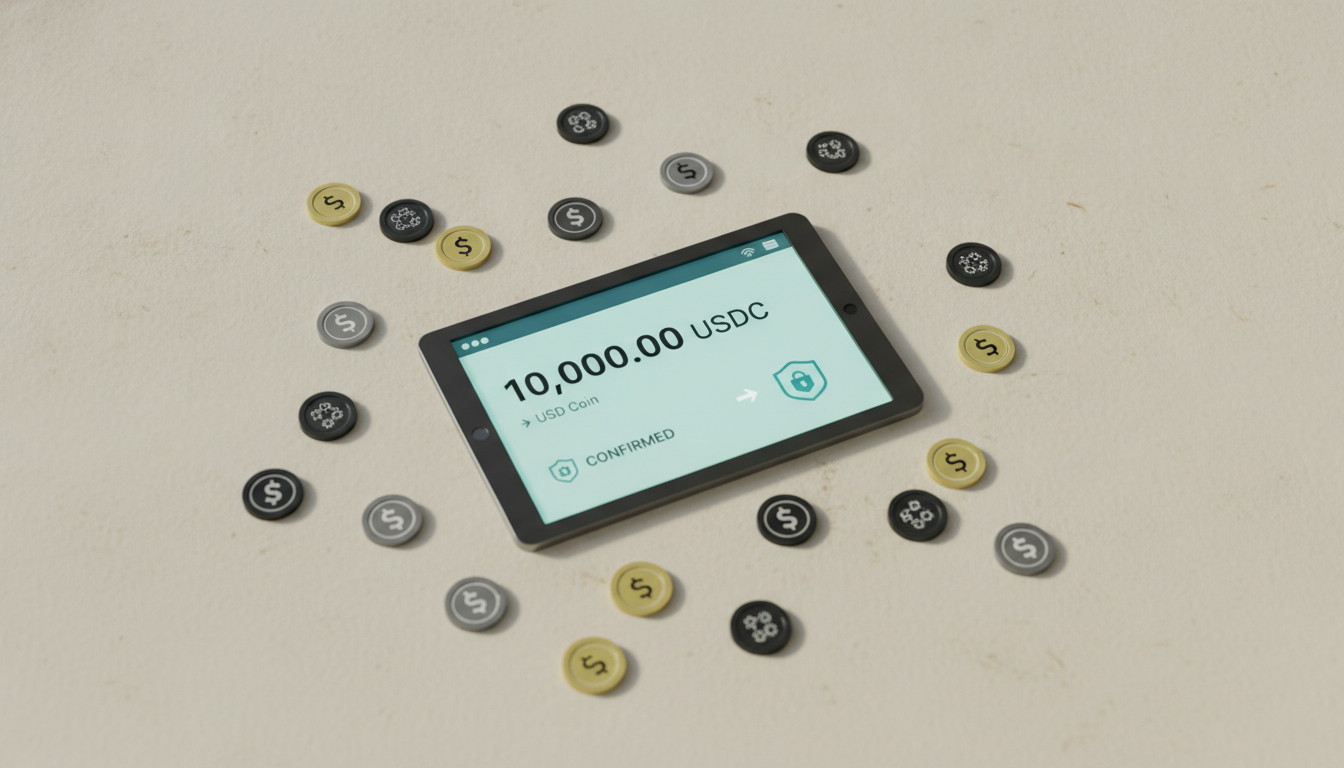
Recurring payments using stablecoins improve cash flow by clearing invoices sooner and with fewer middlemen. Lower network fees reduce your effective cost per renewal, which compounds at scale. The bigger lift comes from automation: programmable renewals and retries, plus clear on‑chain receipts. Visa reports ongoing growth in stablecoin use and even runs stablecoin settlement for institutions, while Stripe now supports subscriptions in stablecoins, which puts this squarely in a mainstream toolkit. (corporate.visa.com)
Improved cash flow. Cash timing is the oxygen of a subscription business. A Monday renewal that posts on Monday, not Thursday, means spend you can plan. Stablecoins settle quickly, day and night. As Visa’s Cuy Sheffield puts it in a recent Q&A, blockchains “positioned … as modern infrastructure that existing forms of money could run on.” For CFOs, that reads like faster working capital turns. (corporate.visa.com)
Lower transaction costs. With cards, flat‑rate pricing often sits between 2.6% and 2.9% plus 30¢ per transaction. On Ethereum L2s, USDC transfers typically cost cents; on Solana, fractions of a cent are common. Will your all‑in costs always be lower? Not if you add extra services. But in many subscription flows, especially cross‑border and micro‑renewals, the math is favorable. (mypayadvisor.com)
Higher retention through automation. Failed cards create involuntary churn, often estimated in the 10–15% range for recurring card payments. Stablecoin renewals avoid some card‑specific failure reasons, and you can orchestrate retries directly in smart contracts or via APIs. The result is fewer silent cancellations and a healthier renewal rate, especially when combined with tailored dunning. This is where stablecoin subscription billing starts to look like an ops advantage, not just a payment choice. (gocardless.com)
A before/after that hits home:
- Before: ACH pulls initiated Friday post Monday or Tuesday. Weekend renewals stack, support queues bloat, and your finance team guesses at Monday’s cash.
- After: USDC renewals clear Saturday morning. Ledger entries reconcile faster, and a single dashboard shows which invoices need a retry. Time saved becomes churn saved. See the practical steps in our guide to accepting crypto and stablecoin payments for remote teams and startups. Complete crypto and stablecoin acceptance guide
Customer experience. Think of stablecoins like prepaid balance that always equals a dollar. For frequent renewals, that simplicity reduces friction. And with Ethereum smart contracts, you can authorize automated pulls, so customers don’t have to push funds each cycle. The key is making it boring to the end user: a familiar checkout, a normal invoice, and reliable on‑chain receipts. (ethereum.org)
Scale frame. Stablecoin activity has reached record levels in recent years, and analytics from Visa and Chainalysis indicate expanding address counts and transfer volumes, with USDC and USDT dominating use. For subscriptions, that depth translates into liquidity and predictable rails you can trust at month‑end. (corporate.visa.com)
3) Setting Up Recurring Payments With Stablecoins

To implement repeat billing with stablecoins, you’ll connect three layers: the coin (e.g., USDC), the chain (e.g., Base, an Ethereum L2), and a billing workflow that can schedule renewals and dunning. Start with a coin and chain your customers already use, then choose a processor that supports both on‑chain collection and subscription logic. Stripe’s announcement of stablecoin subscriptions and Visa’s settlement milestones show that mainstream rails exist alongside crypto‑native ones, which reduces implementation risk for finance teams. This is the practical path to stablecoin subscription billing. (stripe.com)
Step‑by‑step integration
- Choose your stablecoin and chain. For U.S. dollar pricing, USDC on an L2 offers broad support and low fees. Solana is compelling for throughput and sub‑cent costs. Check fee dynamics and wallet support before committing. (fortune.com)
- Pick a payment processor or path. Options range from traditional PSPs with stablecoin support to crypto‑native gateways or a direct smart‑contract flow. Stripe supports subscriptions in stablecoins; many crypto processors expose subscription APIs or webhooks. (stripe.com)
- Decide custody and treasury. Will you hold coins or auto‑convert to fiat? Fiat conversion removes crypto balance sheet exposure. If you do hold coins, establish policies for cold vs hot storage and reconciliation.
- Build the checkout UX. Offer stablecoin as another method, not a detour. Keep the renew amount in local currency with a live USD equivalent, show the chain, address/QR, and a one‑click “open wallet” button.
- Wire the renewal logic. For pull‑style billing, use a smart contract or authorized wallet to initiate charges at interval. For push‑style, generate invoices with due dates and embed payment links.
- Connect dunning. Add retries and communications for failures: email first, then SMS or in‑app prompts. More in the next section.
- Reconcile and report. Feed on‑chain receipts and fiat conversions into your ledger, map them to invoices, and align with tax reporting schedules.
Which processor should you use? A decision table helps.
Integration paths for recurring stablecoin billing
| Approach | Who holds keys | Automation method | Settlement speed | Typical fees | Best for |
|---|---|---|---|---|---|
| Traditional PSP with stablecoin support (e.g., Stripe) | Custodial | PSP subscription engine | Minutes | PSP fee + network fee | Teams wanting familiar dashboards and chargeback tooling |
| Crypto‑native gateway (e.g., Coinbase Commerce‑style, BitPay‑style) | Custodial or merchant | Webhooks + billing app | Minutes | Gateway fee + network fee | Global reach, multiple chains, flexible coin options |
| Direct smart‑contract billing on Ethereum (L2) | Merchant (self‑custody) | Contract triggers + schedulers | Seconds to minutes | Network fee | Engineering teams needing programmable pulls/streams |
| Wallet‑based scheduled transfers (customer push) | Customer | Wallet scheduler | Minutes | Network fee | Freelancers/SMBs with simple renewals and low overhead |
One example among many: some platforms like the SeevCash App package the above steps so startups and remote teams can accept USDC renewals on Ethereum L2s or Solana while auto‑converting a percentage to fiat for payroll. That mix helps keep working capital predictable without taking on crypto exposure. Return to brand‑agnostic guidance below.
Checkout best practices
- Shorten the leap. Show a stablecoin option alongside cards, with a one‑line explainer: “Pay $49 in USDC on Base (low fee).”
- Show the chain. Mis‑sends happen when customers pay on the wrong network. Display the accepted chain prominently with an icon.
- Offer Pay links. Generate a unique address and memo per invoice. Payment links reduce copy‑paste errors and speed settlement. Payment links and crypto checkouts
- Set smart grace periods. Renewals that land 12 hours late shouldn’t cancel immediately. Give a sensible window plus automated retries.
💡 Pro Tip: Consider offering a small discount or loyalty credit for customers who choose stablecoin billing. Even 1% can nudge adoption, and lower network fees still improve unit economics.
A practical anchor on fees. Ethereum’s Dencun upgrade made L2s cheaper by moving data into “blobs,” and press analysis showed dramatic reductions for L2 transactions that carry subscriptions. Solana’s median transfer fee remains far below a cent for simple transfers. Both matter when you’re collecting thousands of renewals daily. (fortune.com)
A word on Ethereum. Its smart contracts let you build true “pull” subscriptions, not just invoices customers push. That automation trims back‑office work and tightens recoveries. Start with a simple contract and a trusted scheduler, and add complexity only as you validate the flow. (ethereum.org)
For a broader primer on coins, use cases, and when to deploy them, see our stablecoin guide for businesses. Stablecoins for business: what they are, how they work, and when to use them
4) Dunning Best Practices
Dunning—the process of recovering failed renewals—is your subscription safety net. Crypto dunning best practices combine smart retries, targeted messages, and optional method switching. The goal isn’t nagging, it’s clarity. First, know your baseline: card systems fail for reasons stablecoins don’t (expired cards, issuer rules), but on‑chain payments can fail for different reasons (insufficient wallet funds, wrong chain, nonce errors). GoCardless estimates 10–15% of card payments fail; much of that is avoidable with better timing and comms. Your dunning flow should reflect the failure type and the rail used. (gocardless.com)
Understanding the dunning process Think of dunning as triage. You detect a failed payment, classify the cause, apply the right recovery path, and stop when either the invoice is paid or the account cancels. For stablecoin renewals, the most common blockers are empty wallets, customers paying on the wrong chain, or missed due dates on push‑style flows. Your messaging should address each clearly. “Insufficient balance” calls for a top‑up link. “Wrong chain” needs a bright banner that shows the accepted network and a one‑click “try again.”
Effective communication strategies
- Change the subject line to match the failure. “Card expired” is different from “Insufficient USDC.”
- Put the how in the first line. “Add $49 USDC to your wallet” with a link that opens the right chain.
- Show the timer. A renewal with a 72‑hour grace period lets buyers breathe while still prompting action.
- Offer a one‑click switch. Let customers change from stablecoin to card or vice versa, and keep the current cycle active while the switch completes.
- Keep receipts human. Every recovery is a moment to rebuild trust, send a short “All set” note.
Automation tools Automation works best when it adapts. Retry at times customers actually fund wallets. If you sell to developers in Europe, 9 a.m. CET is smarter than 2 a.m. ET. Expand the channel mix from email to in‑app prompts and SMS where permitted. Internally, track three numbers: failed‑payment rate, dunning recovery rate, and days‑to‑recovery. Recurly’s public materials emphasize the role of dynamic retries and cause‑specific messages in lifting recovery, which lines up with what we see in practice. (docs.recurly.com)
What does this mean for you? Start small. Map your top two failure reasons and write messages for each. Add one retry at a better time. Then measure. You’ll likely uncover a pattern that unlocks a few percentage points of monthly recurring revenue with almost no engineering.
A lived example A remote‑team tool added “open wallet” deep links to its dunning emails and SMS. Before, only 28% of on‑chain failures recovered within three days. After, 52% recovered in that window, and voluntary cancellations fell when customers realized renewals weren’t blocked forever; they just needed a top‑up.
If you’re designing for a distributed workforce and contractor mix, see our payroll playbook for more tips on wallet education and payout timing. Crypto payroll for remote teams
5) Addressing Risks and Considerations
Stablecoin subscriptions carry real risks you should plan for: coin risk, chain risk, operational risk, and policy risk. The good news is that most can be mitigated with coin selection, chain choice, and layered controls. Start with fiat‑backed coins that publish reserve attestations and operate on reliable networks. Mainstream sources explain the stablecoin taxonomy and risks, and IMF work has analyzed run dynamics and redemption pressure in stress scenarios, which is a reminder to keep treasury conservative. (federalreserve.gov)
Potential risks
- Coin risk. If a coin breaks peg or faces an operational error, your subscription flow can wobble. Favor well‑capitalized fiat‑backed coins with transparent reserves.
- Chain risk. Congestion or outages can delay renewals. Use L2s improved by Dencun for lower, steadier fees, and build a fallback chain if your processor supports it. (fortune.com)
- Operational risk. Misdirected payments and reconciliation gaps happen when addresses or chains are unclear. Invest in clear UX and invoice‑to‑receipt matching.
- Data and reporting. You’ll need a clean audit trail for on‑chain receipts and any fiat conversions.
Regulatory considerations While this article isn’t legal advice, every subscription business should align stablecoin flows with evolving rules. U.S. policy discussions have focused on whether issuers or affiliates can pay “rewards” on stablecoin balances and on how to treat interest‑bearing designs. Media and trade groups sometimes describe a “stablecoin loophole,” referring to arrangements where rewards on stablecoin holdings act like deposit interest without being bank deposits. Recent commentary debates whether such rewards should be curtailed or explicitly permitted under new law. This matters if you ever market rewards to your users or hold customer balances. (forbes.com)
Do any stablecoins pay interest? The token itself doesn’t pay interest by default, but platforms may offer rewards. Coinbase offers USDC rewards to eligible users in certain regions, and PayPal introduced PYUSD Rewards for eligible U.S. users. In DeFi, DAI holders can opt into the Dai Savings Rate via smart contracts, which is a different risk model. If you promote any yield to subscribers, treat disclosures and eligibility as a formal product decision. (help.coinbase.com)
Mitigation strategies
- Treasury policy first. If you hold coins, set conservative limits, auto‑convert a tranche to fiat, and document who can move funds.
- Multi‑rail readiness. Keep a card fallback and a second chain ready. Stablecoins are a tool, not a religion.
- UX guardrails. Always show the accepted chain and use QR codes or deep links to reduce manual entry.
- Auditability. Capture on‑chain transaction IDs and map them to invoice IDs in your accounting system.
- Vendor diligence. Whether you use a PSP, gateway, or a wallet SDK, review their incident history and uptime.
One example among many: SeevCash Plus packages operational controls like multi‑sig approvals and auto‑conversion rules for finance teams that prefer a guardrail‑heavy approach to recurring crypto billing. It’s optional. The point is to match tooling to your risk appetite and customer base.
For a deeper grounding on business‑grade setups, see our primer on when to use stablecoins and how to introduce them safely. Stablecoins for business: when to use them
Common Questions About Stablecoin Subscriptions
What are the advantages of using stablecoins for subscriptions?
The big three are cost, speed, and automation. Network fees on Ethereum L2s and Solana are usually far below card interchange, settlement is near‑instant and doesn’t stop on weekends, and smart contracts enable true “pull” billing with custom retry logic. Stripe supports stablecoin subscriptions, which confirms the model’s practicality, and Visa’s stablecoin settlement program signals growing institutional comfort. If you serve global subscribers, those shifts can translate into better cash flow and a lower failed‑payment rate. (stripe.com)
How can I automate the dunning process for my subscription service?
Start by tagging failure reasons accurately. Schedule retries when customers are likely funded, and tailor messages to the reason: “insufficient USDC,” “paid on the wrong chain,” or “card expired.” Add SMS or in‑app prompts if email goes unread. Recurly’s materials emphasize dynamic retries and targeted messaging to lift recovery, and GoCardless highlights the high baseline failure rate for cards. Mirror those lessons on your crypto rails. (docs.recurly.com)
Are there any regulatory concerns with using stablecoins?
Yes. You’ll want clarity on funds flow, KYC/AML responsibilities, and how your jurisdiction treats stablecoin rewards and interest. In U.S. debates, some observers refer to a “stablecoin loophole” around rewards paid on stablecoin balances by issuers or affiliates. Track policy updates and align your marketing and treasury practices accordingly. (aba.com)
What should I do if a customer’s payment fails?
Treat it as an operations play, not a support fire drill. First, detect the cause. Second, trigger the right fix with a one‑click link, top‑up USDC, switch networks, or move to a card. Third, retry on a schedule that reflects your audience’s funding habits. The goal is to recover the renewal before the grace window closes and without making the customer feel chased.
A brief, expert take
“As these technologies matured, blockchains were positioned as modern infrastructure that existing forms of money could run on,” says Cuy Sheffield, Head of Visa Crypto Labs. That framing helps subscription operators evaluate stablecoins as a practical rail, not an ideology. (corporate.visa.com)
Do this today
Pilot a 30‑day recurring plan with USDC on an Ethereum L2 and a card fallback:
- Add “Pay with USDC (Base)” at checkout.
- Set renewals to pull via smart contract or issue push invoices with auto‑generated links.
- Implement a two‑message dunning flow for “insufficient balance” and “wrong chain,” plus one retry at a smarter local‑time window.
- Reconcile on‑chain receipts to invoices weekly.
If you prefer a packaged path, you can trial a stablecoin billing flow using a platform like the SeevCash App while keeping your existing card setup intact. Then expand only if the numbers lift your renewal rate and reduce your cost to collect.
The complete guide for startups and remote teams • Payment links and crypto checkouts • Crypto payroll for remote teams
Sources for selected claims:
- Stripe added stablecoin subscriptions; Visa disclosed stablecoin settlement run rate and rising address counts. (stripe.com)
- 39% of U.S. merchants accept crypto; 84% expect it to be mainstream within 5 years. (businesswire.com)
- Four stablecoin types and fiat‑backed dominance. (federalreserve.gov)
- L2 and Solana fee dynamics after Dencun; sub‑cent Solana fees. (fortune.com)
- Card failure rates and dunning emphasis. (gocardless.com)
Looking for a structured rollout? Book a working session, pick one plan, and turn on stablecoin renewals this week. Your next invoice cycle can be the first that settles on time, every time.